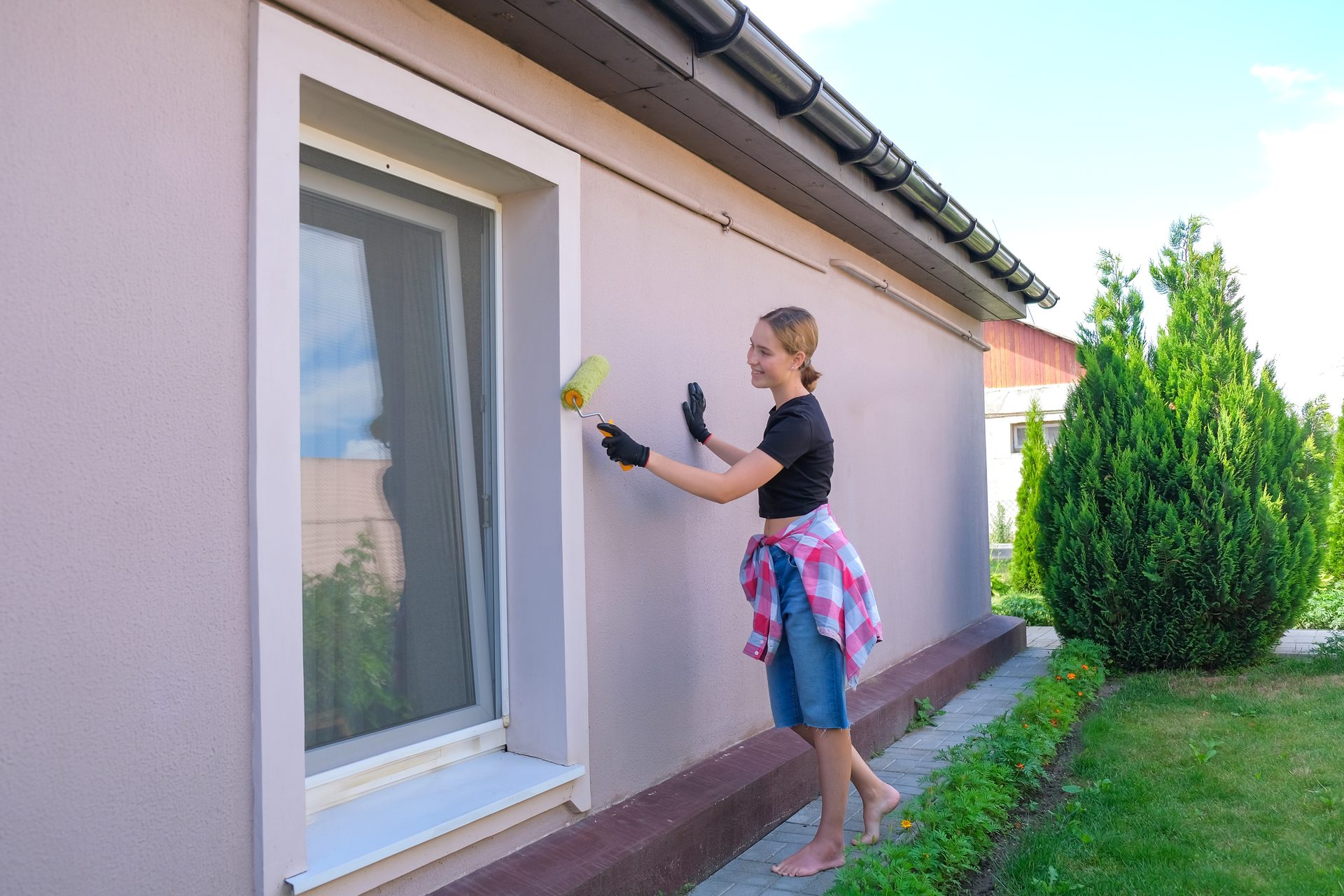
Rendered walls look fantastic when they are new, but it does not take long for the British weather to leave its mark. Green streaks, black spots and grey dullness are common on rendered buildings across Hampshire and West Sussex, and many property owners are unsure how to deal with them. That is where K render cleaning comes in.
This guide explains why render gets dirty, why it needs a gentler approach than brick or paving, and what a professional clean involves. It is written for homeowners, landlords, managing agents and business owners who want their buildings to look their best without risking damage.
What is K Rend and why does it need special care?
K Rend is a well-known brand of render, a thin coating applied to the outside of a building to protect the walls and give them a clean, modern finish. It is widely used on new builds, extensions and refurbishments because it comes in a huge range of colours and is applied in a thin layer over insulation or masonry.
Unlike brick or stone, render has a relatively delicate surface. Many modern renders are silicone or acrylic based, which helps water run off, but the finish can still be scarred by harsh cleaning. Strong jets, the wrong chemicals or a poor technique can strip colour, open up the surface or force water behind the coating.
That is why a careful approach to the cleaning of rendered walls is so important, and why it is worth choosing a team that understands the material.
Why render turns green, black and grey
Render is usually left in the open year after year, on walls that are shaded, north-facing or close to trees. A few simple things cause most of the staining you see.
- Algae: green slime that thrives on damp surfaces, especially in the shade and on north-facing walls.
- Moss and lichen: these take hold on slightly rougher surfaces and areas that never fully dry.
- Mould: dark spots that form in damp, still corners and under windowsills.
- Dirt and pollution: a grey film from traffic, dust and city air, especially at ground level.
- Water staining: streaks below windowsills, gutters and ledges, where water runs down the wall over time.
None of this is harmful in itself, but it does make a building look neglected. Left alone, algae and moss can also hold moisture against the wall, which can shorten the life of the coating.
Why you should not pressure wash render
The first instinct for many people is to reach for a pressure washer. On render, that is almost always a mistake. High pressure can blast the finish away, leave patchy light and dark areas and push water into hairline cracks and joints, where it can cause damp inside the building.
Professionals use a gentler method often called soft washing. A low-pressure spray applies a cleaning solution that kills the algae and moss at the root, and the loosened growth is then rinsed away with gentle water flow. It is the safer way to clean render, and it also tends to last longer, because the growth is treated rather than just blasted off the surface.
If you are curious about when higher pressure is appropriate, our article on how high-pressure cleaning protects property value explains where it works well, such as paving, car parks and industrial surfaces, and where it does not.
How a professional K render cleaning service works
Every job is different, but a good clean tends to follow the same sensible steps.
- Survey: the team inspects the walls, notes the type of render, checks for cracks and loose areas and identifies the kind of growth present.
- Preparation: windows, doors, vents and plants are protected, and any nearby surfaces are covered or pre-wetted.
- Treatment: a biocidal solution is applied at low pressure to kill algae, moss and mould.
- Dwell time: the solution is left to work, which is often the key to a lasting result.
- Rinse: the walls are gently rinsed with clean water, working from the top down.
- Inspection: a final check and, where appropriate, advice on keeping the render clean for longer.
Results often develop over the following days and weeks, as the treatment continues to break down remaining growth. Rain helps with this, and many owners are surprised by how bright the walls look a month later.
How often should render be cleaned?
There is no single answer, as it depends on where the building is. As a rough guide, a render clean every two to three years suits many buildings. Properties near trees, water or heavy traffic, and walls that face north, may need attention more often.
Regular, gentle cleaning is better than waiting until the walls are heavily stained. Light growth is easier to remove and less likely to need stronger treatment. It also protects the investment you have made in the finish.
Where K render cleaning makes the biggest difference
Render cleaning is useful on all kinds of buildings, but it has particular value in a few situations.
- Homes and extensions, where the front elevation sets the tone for the whole property.
- Rental properties and landlords, where presentation affects tenant demand and inspections.
- Offices, shops and showrooms, where a clean frontage tells customers you care about your business.
- Schools, care homes and public buildings, where cleanliness is important to visitors.
- Properties being prepared for sale, because a clean exterior helps first impressions in photographs and viewings.
Our team often combines render cleaning with other exterior work, including windows, gutters and fascias. We explain why in our guide to gutter and window cleaning for property maintenance. Blocked gutters are a major cause of streaks and damp on rendered walls, so keeping them clear protects the finish too.
Tips for keeping render cleaner for longer
A professional clean gives you a fresh start. A few simple habits can then help it to last.
- Keep gutters and downpipes clear so water does not overflow and stain the wall.
- Trim back trees and climbing plants that keep walls damp and shaded.
- Check around windowsills, copings and joints for cracks and have them repaired.
- Make sure ground levels and flower beds do not splash soil up the wall.
- Ask about an anti-algae treatment, which can slow regrowth between cleans.
If you do clean render yourself, use a soft brush and a gentle solution and never use a pressure washer on the wall. For anything above ground-floor height, it is safer and often cheaper in the long run to hire a team with the right access equipment.
Choosing a render cleaning company
Not every cleaner is experienced with render, so it pays to ask a few questions before you book.
- Do they use soft washing or low-pressure methods on render?
- What cleaning solutions do they use, and are they safe for plants, pets and the surrounding area?
- Do they have insurance, and can they work safely at height?
- Can they provide references or photos of similar work?
- Will they survey the building before giving a price?
A trustworthy company will welcome these questions. We would rather explain exactly what we plan to do than leave you guessing. If you want to see how we compare with other options, our guide to finding the best commercial pressure washing services gives useful pointers on what to look for.
What affects the cost of K render cleaning?
Every building is different, so a good company will survey the walls before it gives you a price. The main things that influence the cost are the size and height of the walls, how heavily they are stained, how easy it is to reach them and how much protection the surrounding area needs. A small bungalow with light algae is a very different job from a three-storey block with years of growth.
Access is often the biggest factor. Ground-floor walls can be reached with a standard lance, but upper floors may need extension poles, a cherry picker or a rope access team. It is worth asking at the start how the company plans to reach high areas, as this affects both safety and price. A clear written quote that lists what is included avoids any surprises on the day.
Common mistakes with render cleaning
Most of the damage we see comes from a few avoidable mistakes. Using a pressure washer is the biggest, but there are others. Applying strong bleach can stain the render, harm plants and run down onto paths. Cleaning in hot, direct sunshine makes the solution dry too quickly, leaving streaks. And rinsing from the bottom up can leave dirty runs that are hard to remove.
Another common problem is cleaning a wall that has cracks or loose patches without repairing them first. Water can get in through even a hairline crack, so it is worth checking the render and sealing any gaps before or straight after a clean. A good team will point these out and tell you if something needs a specialist repair.
Render cleaning for commercial and multi-unit buildings
For offices, retail units, schools and blocks of flats, the exterior is part of your brand. A clean, bright frontage tells visitors that the building is well managed. Because these properties are often larger and busier, the work needs careful planning to limit disruption.
We can arrange work outside opening hours, at weekends or in phases, and we can combine the clean with windows, gutters and signage so that everything is done in one visit. Managing agents often find it useful to book a regular programme, with K render cleaning scheduled alongside other exterior maintenance, so the building always looks its best and costs are predictable.
If you are comparing quotes, ask whether the price includes the treatment and the rinse, and whether the company will return if any growth reappears soon afterwards. Honest firms are happy to stand behind their work, and a short guarantee is a good sign of confidence in the method.
When is the best time of year for render cleaning?
Spring and autumn are popular, because the weather is generally mild and damp enough for the treatment to keep working after the clean. Summer is good for quick drying, though very hot days can cause the solution to dry too fast. Winter work is possible, but frost and low temperatures can interfere with the process.
If your walls are heavily stained, it is usually better to book sooner rather than later. Growth tends to spread, and the longer it is left, the harder it is to remove completely.
Frequently asked questions
Will cleaning damage my render?
Not when it is done properly. Soft washing with a low-pressure spray and a suitable solution is designed to protect the finish while removing the growth.
How long does the treatment last?
It varies with the building and the surroundings, but a good clean often lasts a couple of years or more. Shaded walls may need more frequent attention.
Can render be cleaned in winter?
Yes, as long as the weather allows. Frost is the main concern, as water on the wall can freeze. Many people choose mild, dry spells in spring and autumn.
Do I need to be at home?
Usually not. We need access to the walls and a nearby water supply, and we will let you know if we need anything else before we start.
Speak to Southern Window and General Cleaning
If your rendered walls have lost their sparkle, we would be happy to take a look. We will survey the building, explain the best method and give you a clear quote. Get in touch with our team to arrange a visit, or visit our home page to see the commercial and exterior cleaning services we provide across Hampshire and West Sussex.
Share This Story, Choose Your Platform!
About Southern Window & General Cleaning Co. LTD

Quick Navigation